 EN
EN

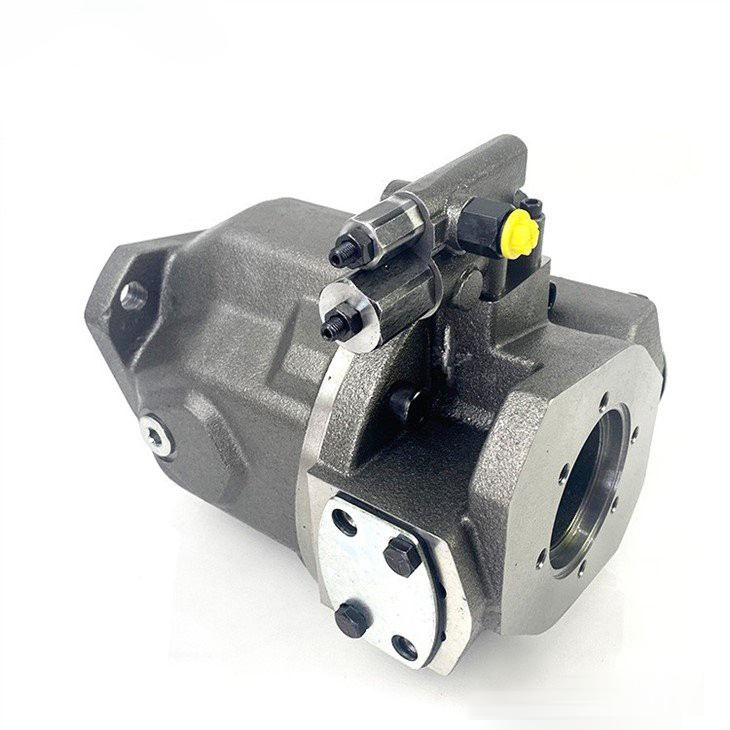
In daily device use, many people will encounter such a scenario:
The equipment has stopped, the valves have returned to the center, and even the engine has shut down, but the hydraulic motor is still slowly turning. At this moment, many people's first reaction is often——
Done, is the motor broken
Is there going to be a big problem with the system? In fact, whether the motor will still turn after stopping cannot be simply judged by "normal" or "fault". What really matters is never whether or not to turn, but the following key points: whether or not to turn for a long time, whether or not to turn quickly, whether or not to stop, whether or not there is a load. As long as you distinguish these points clearly, you can basically judge whether or not there is a big difference.
1、 First of all, let's conclude that "slight rotation" after the motor stops is not necessarily a fault. Let's start with the most common and easily misjudged normal situation. If you see the following state, you can generally rest assured: after the equipment is stopped, the motor only rotates gently and the speed is very slow, almost in a "crawling" state. Within 1-3 seconds, the motor completely stops in an unloaded state without the drum, platform, or walking mechanism. If the performance of the cooling and heating machine is similar, then this situation is a normal phenomenon in the vast majority of hydraulic systems. Why does this' slight rotation after shutdown 'occur? The reason is actually very simple, with only four words in essence:
�� Residual pressure release
Even if you have stopped the machine: there is still a certain amount of pressure in the pipeline. The internal chamber of the oil motor is not completely depressurized in an instant. During the process of pressure balance, the oil will push the motor to rotate at a very small angle, which is more like "following the oil for a while" rather than the system continuously supplying oil. As long as it rotates slowly, stops quickly, and does not carry a load, this is the system's "natural ending" rather than "problem".
- What really needs to be wary of is these 'unstoppable rotations' problems, which are often not' rotations' but 'unstoppable no matter what'. If you see the following situations, then you should attach great importance to them: 1 ️⃣ After shutdown, the motor can still rotate for more than ten seconds, and even longer after the valve returns and the pump stops, it continues to rotate for a time significantly beyond the normal release range. two ️⃣ The rotational speed is visible to the naked eye, not a slight shake or the kind of "one shake and stop", but you can clearly see it spinning. three ️⃣ Being able to move with a load, for example, when the winch drum slowly releases the rope and rotates the platform, the walking mechanism deflects and crawls slowly. When the equipment stops, the step of "starting to move on its own" is already a very clear danger signal.
4 ️⃣ The refrigeration unit is normal, but the heating unit cannot stop no matter what. In the refrigeration state, it hardly rotates,
Once the oil temperature rises, the motor starts to run longer and longer. This indicates that the problem is not in operation, but in the system's sealing ability.
3、 This kind of "self rotation" essentially tells you that the system can no longer lock the oil and continues to rotate even after the motor stops. Essentially, there is only one reason: �� The common problems of ineffective oil sealing within the system are concentrated in the following directions: increased internal leakage of the motor, poor sealing of the multi way valve, mid position serial oil brake valve, and balance valve. After the oil temperature rises, the gap becomes larger, further amplifying the internal leakage. The system should have "locked the oil" when the machine is stopped,
But now the oil is quietly bypassing the sealed position,
Drive the motor to continue rotating. So what you see as' rotation 'is not an accidental phenomenon,
But the system is reminding you in the most intuitive way: I can't control myself anymore.
4、 Why is a heat engine more prone to this problem than a cold engine? This is a crucial point that many people overlook. When the engine is cold, the viscosity of the oil is high, and the leakage rate is slow. When the engine is hot, the oil becomes thinner, and the influence of internal clearances is amplified. The position that was originally "barely locked" completely fails at high temperatures, which is why:
�� Cold engines are fine, but problems such as severe self rotation often do not improve on their own and only become increasingly apparent. 5、 Here's the simplest and most practical way to make a judgment. If you don't want to study too many principles, just remember this sentence: what can stop quickly is a normal phenomenon.
It can't stop no matter what, it must be a malfunction. Don't worry about whether it's turning or not,
Keep an eye on whether it can stop or not. This is one of the most intuitive and reliable methods for on-site assessment of the health status of motors and hydraulic systems.