 EN
EN

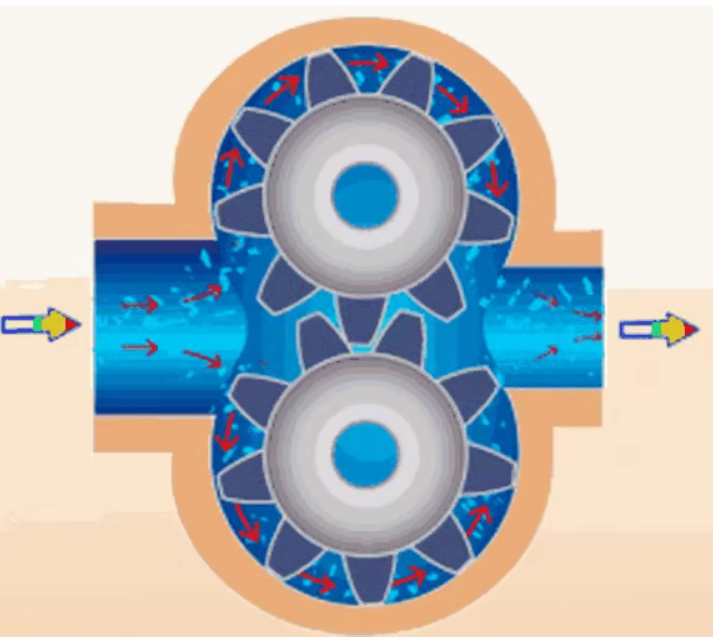
In hydraulic systems, vane pumps are widely used in machine tools, injection molding machines, construction machinery, and various industrial equipment due to their smooth operation, low noise, and uniform flow rate. In the classification of vane pumps, "single acting vane pumps" and "double acting vane pumps" are the two most commonly mentioned types. Many people use it every day, but they are not really clear about the core difference between them. In fact, the differences between the two mainly lie in four aspects: internal structure, working mode, flow characteristics, and applicable working conditions.
- The fundamental difference in internal structure is that the structure of a single acting vane pump is relatively simple, and its core feature is the fixed eccentricity between the rotor and stator. It is precisely this eccentricity that determines the "increase" and "decrease" of the pump chamber volume during the rotation of the blades, thereby achieving the process of oil suction and pressure. Single acting vane pumps usually only have one suction port and one discharge port, which means that during the entire rotation of the rotor, only one complete suction and pressure oil cycle is completed. The internal structure of the double acting vane pump is significantly more complex. Its stator is mostly an elliptical curved structure, and there are usually two oil suction zones and two oil discharge zones arranged inside the pump chamber. When the rotor rotates half a turn, it completes one oil suction and one oil pressure cycle. Therefore, during the entire rotation of the rotor, two complete oil suction and pressure cycles are completed. It is precisely this double suction and double row structure that gives the double acting vane pump a natural advantage in flow output.
2、 The difference between working principle and displacement output from the perspective of working mode: single acting vane pump:
The rotor only completes one oil suction and one oil pressure per rotation, and the displacement per unit time is relatively small. Due to having only one workspace, its output flow rate will fluctuate slightly with changes in rotor angle. Double acting vane pump:
Every time the rotor rotates, it completes two oil suction and two oil pressure operations, resulting in a larger displacement per unit time. At the same time, due to the alternating output of the two working areas, flow pulsation can be largely offset, making the output flow more continuous and stable. Simply put, under the same speed and volume conditions, the actual output capacity of a double acting vane pump is usually higher than that of a single acting vane pump, and the operating state is more stable.
- The difference between flow pulsation and operational stability: Single acting vane pumps inevitably experience periodic flow fluctuations during operation due to having only one oil suction zone and one oil pressure zone. This type of flow pulsation is particularly pronounced during low-speed operation, which may cause slight system vibrations and is not very friendly to high-precision control systems. The double acting vane pump, due to its dual suction and double row structure, has two sets of pump chambers working alternately, which can achieve "staggered output" and keep the flow rate of the entire system almost continuous. Therefore, its flow fluctuation is very small, it runs more smoothly, and the noise is also lower, making it particularly suitable for hydraulic systems that require high stability.
4、 The difference between carrying capacity and applicable working conditions is also very clear from the perspective of application scenarios: the typical application scenario of single acting vane pumps
Suitable for hydraulic systems with low flow requirements and moderate pressure requirements. Due to its simple structure, mature manufacturing process, convenient maintenance, and low overall cost, it is often used for systems that pursue "economy and practicality". Typical application scenarios of small injection molding equipment, lightweight automation equipment, small power hydraulic stations, and double acting vane pumps in machine tool hydraulic systems
Suitable for working conditions with high flow rate, long continuous operation time, and high requirements for flow stability. For example, due to its uniform flow rate and small pulsation, it is more suitable for use in hydraulic systems with high stability and high responsiveness requirements. Injection molding machine main pump system industrial production line hydraulic power unit engineering machinery auxiliary hydraulic system high-precision pressure control equipment
5、 From the perspective of selection, if your system pursues low cost, simple structure, easy maintenance, and low requirements for flow stability, then a single acting vane pump is already sufficient;
But if your system has high requirements for flow continuity, noise, stability, and requires a larger unit time displacement output, then a double acting vane pump is obviously a better choice. Ultimately, there is no such thing as' who is necessarily better 'between the two. The key is to consider your specific operating requirements, system design goals, and cost budget. In summary, the core differences between single acting vane pumps and double acting vane pumps are mainly reflected in their structural form, operating frequency, flow characteristics, and application fields. By understanding these differences, it is not easy to choose or use the wrong pump in the actual selection and use process.