 EN
EN

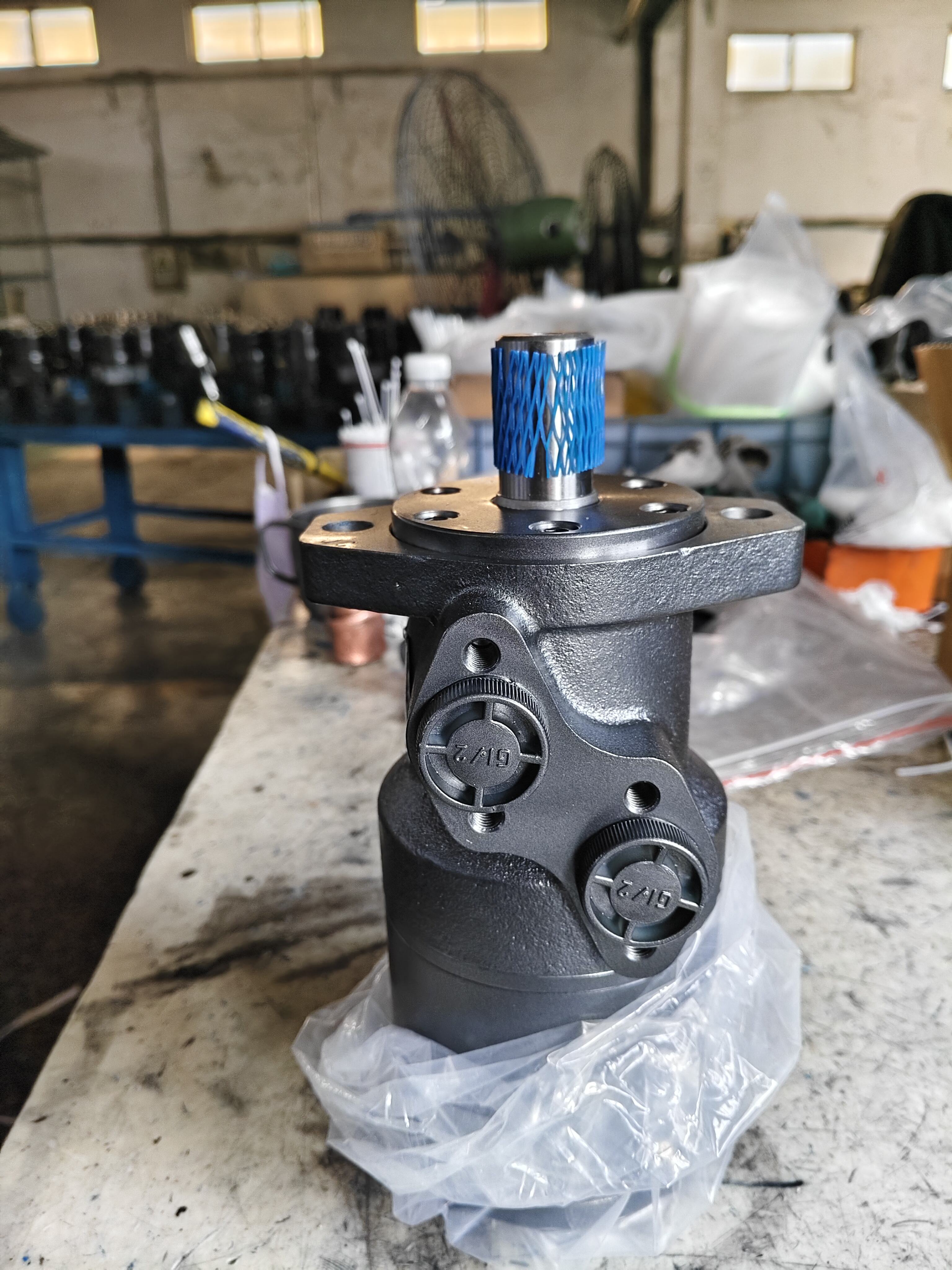
The hydraulic system cannot do without core components such as hydraulic pumps, hydraulic valves, hydraulic motors, and hydraulic cylinders. Someone may ask: Since water is everywhere and cheap, can we directly use water instead of hydraulic oil?
The answer is: theoretically, it can run, but the consequences are not ideal. It's like using a regular bicycle to pull a truck, it can move a few times, but don't expect performance or lifespan. Let's see the reasons from five aspects below.
1. Insufficient lubrication
Principle: Hydraulic oil forms a stable oil film on the metal surface (fluid lubrication/elastic fluid lubrication), turning direct contact between metals into "oil oil" shear, greatly reducing wear and heat generation. Water hardly forms a film, and its boundary lubrication ability is close to zero.
Reference scale: Dynamic viscosity of water at 20 ° C ≈ 1 mPa · s; The dynamic viscosity of ISO VG 32 hydraulic oil at 40 ° C is approximately 25-30 mPa · s (slightly varying with density). Water is 20-30 times thinner than commonly used hydraulic oil.
Areas prone to problems:
Gear pump side plate/tooth surface abrasion, biting and sticking;
The friction surface between the blade tip of the vane pump and the fixed ring is scratched and bluish;
Piston pump plunger cylinder bore mating surface, inclined disc sliding shoe surface dry friction;
The small clearance between the valve core and the valve body (in the order of a few micrometers) may become "frayed" and stuck after losing lubrication.
Example
Test run a 25 MPa low flow plunger pump with clean water, and even without load, rapid temperature rise and loud abnormal noise may occur within tens of minutes to hours; Upon inspection, it was found that the sliding shoe surface was scratched and the plunger end surface had black and blue hair.
If the vane pump loses the oil film, it will experience sharp whistling and pressure not reaching the rated value after running for a few hours. After disassembly, there will be obvious "grooves" on the edges of the blades.
2. Corrosion issues
Principle: Water contains dissolved oxygen and electrolytes, which are prone to electrochemical corrosion; At the same time, it will promote pitting and crevice corrosion. Water can also cause common sealing/elastic materials (such as NBR, PU, etc.) to absorb water and expand, accelerating aging.
Areas prone to problems: pitting corrosion on the mating surface of the valve core and valve body → sticking and crawling; The chrome plated layer on the oil cylinder piston rod is corroded, and the sealing lip is sharpened; Corrosion on the side plate and inner wall of the gear pump casing → abrasive particles entering the circulation; The sealing element (NBR/PU) absorbs water, reduces hardness, and undergoes size changes, resulting in increased leakage. Example: If outdoor equipment is not drained and dried in a timely manner after being submerged in water, the valve core may develop shallow rust within three to five days, manifested as delayed action and startup shaking. Some injection molding machines mistakenly connect cooling water to the hydraulic circuit, causing rust spots on the cylinder barrel within a few days, followed by scratches on the sealing lip due to pitting corrosion, and a sharp increase in oil leakage.
3. Cavitation risk
Principle: Water has a low boiling point and high vapor pressure. Once the local pressure at the pump inlet is lower than the vapor pressure of water, it will vaporize into bubbles; Immediately collapsing in the high-pressure zone, micro jets and shock waves are generated, creating pits (cavitation spots) like sandblasting. Reference scale: The vapor pressure of water at 60 ° C is about 20 kPa, much higher than the vapor pressure of hydraulic oil; Therefore, cavitation is more likely to occur under the same inhalation conditions. Areas prone to problems: gear pump tooth top - side plate inlet area, blade pump inlet chamber, plunger pump distribution plate suction window; Local low-pressure areas at throttling ports and sharp corners.
Example
A 30 L/min gear pump, when operated with water at 1500 rpm and with a long suction pipe/fine filter element, will produce a "sandpaper sound/buzzing". After a few days, the side plate will have pitting and crescent shaped pits, and the volumetric efficiency will drop from 90% to 60-70%.
The small opening of the valve reduces the flow of water medium. Under high temperature conditions, needle like pitting pits are commonly found on the valve core and seat, leading to increased internal leakage and noise.
4. Principle of insufficient viscosity: The sealing and leakage control of hydraulic systems strongly rely on the viscosity of the medium. Simply put, the laminar leakage QleakQ_ {\ text {leak}} Qleak in the gap is approximately proportional to 1/μ 1/\ mu1/μ (when the geometry and pressure difference are fixed). When the medium is changed from 30 mPa · s to 1 mPa · s, the theoretical leakage can be amplified by several tens of times.
5. Temperature sensitivity principle: When water freezes at 0 ° C, its volume expands by about 9%, causing cracking of thin-walled parts/pipelines; At high temperatures, evaporation intensifies and vapor pressure increases, leading to more frequent cavitation and pressure fluctuations. Hydraulic oil is equipped with viscosity temperature improver and antioxidant, with a wide working temperature range.
On site impact: low temperature: freezing → pump suction/shell cracking; The impact is significant at the moment of startup, causing the sealing lip to be "broken open"; High temperature: frequent cavitation and pump inlet cavitation; Pressure ripple and noise rise, causing the execution components to fluctuate rapidly.
Example
The outdoor equipment in the north was below zero overnight, and the residual water in the pipeline froze. The next day, fine cracks appeared on the gear pump housing when it was started;
At the metallurgical continuous casting site in an environment of 60-70 ° C, the test circuit using water as the medium frequently experiences pump end noise and pressure drop at high temperatures. It was only after switching back to water ethylene glycol that it barely stabilized.
Direct consequence: significant decrease in volumetric efficiency (more pronounced at higher pressures); Slow pressure building and load crawling; The internal leakage of the valve core increases, causing a difference in system static pressure and an increase in heating. Example: Using water as the medium, a gear pump with a rated pressure of 20 MPa can still rotate under no load, but it cannot be raised under a load of 8-10 MPa; After replacing the same pump with VG46 oil, it can be restored to 18-20 MPa. Components such as servo proportional valves, which are extremely sensitive to small clearances, experience severe zero position leakage and drift when replaced with low viscosity media, making it difficult to stabilize the position loop.
Based on the viewpoints I have presented, hydraulic motors are still more compatible with hydraulic oil.
However, it should be noted that there are water-based hydraulic fluids (HFA/HFB/HFC, such as water ethylene glycol) in the industry, as well as pump/valve/seal and material systems specifically designed for them (stainless steel/nickel plating, ceramic, EPDM/PTFE, etc.). But this belongs to specialized system engineering, and it is not enough to simply replace the existing oil system with water.