 EN
EN

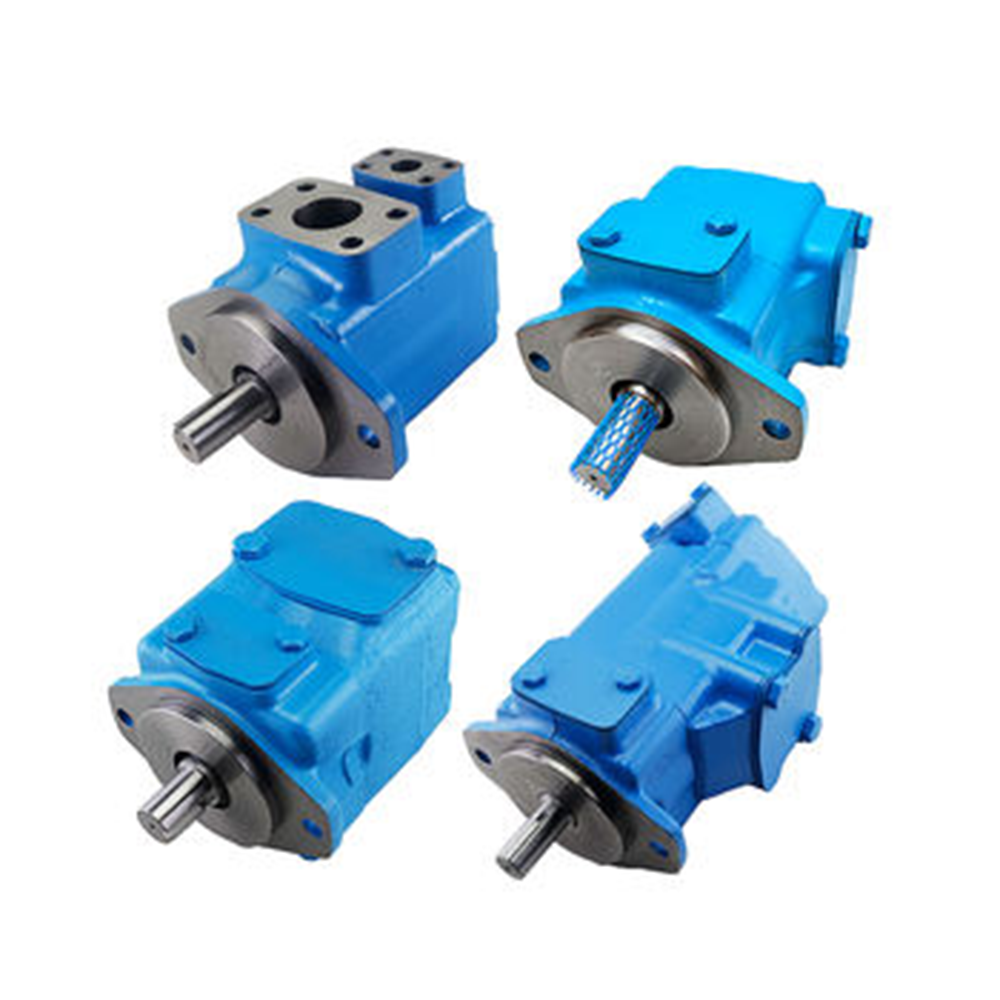
In practical applications of hydraulic equipment, the hydraulic motor, as a key executive component in the system, often determines whether the entire set of equipment can operate stably, long-term and efficiently. Many users often have a confusion when maintaining the equipment: will a hydraulic motor that is not used for a long time be more likely to be damaged than one that is overloaded for a long time?
This seemingly simple question involves multiple factors such as materials science, mechanical structure, hydraulic oil chemical properties, and system operation logic. To find a more objective and comprehensive answer, we need to decompose and deeply analyze the two scenarios separately.
1. Long-term non-use of hydraulic motors: Hidden damage is more severe than you think Most people believe that "equipment won't break if left unused," but in fact, precision mechanical components like hydraulic motors are not suitable for prolonged shutdown. Invisible and intangible damages gradually accumulate during extended idling. 1. Rubber seals lose lubrication over time: The process from softness to brittleness The internal seals of hydraulic motors (such as O-rings, lip seals, shaft seals, etc.) play a critical role in maintaining system pressure and preventing leaks, serving as the motor's most crucial "defense line." When left unused for extended periods, they undergo several inevitable changes: - Hardening and losing elasticity due to lack of lubricating oil immersion - Thermal expansion and contraction from temperature fluctuations, leading to micro-cracks - Surface aging and eventual damage or cracks - Adhesion between sealing surfaces and metal due to lubrication loss, causing secondary friction damage These phenomena often only manifest after the equipment is restarted:
The motor operated for less than two minutes before exhibiting symptoms of "increased oil leakage, unstable pressure, and declining efficiency." In other words—long-term idling leads to the silent yet fatal aging of seals.
2. Internal air and water vapor cause metal oxidation: Once rusted, it is a permanent scar. If there is not sufficient oil protection inside the hydraulic system, water vapor in the air can easily condense on the metal surface, especially in humid environments in the south. These condensed water can cause: spot rust on the inner wall of the rotor, abrasion spots on the surface of the stator, and a decrease in fitting accuracy, resulting in a decrease in volumetric efficiency and damage to the lubricating oil film. When the secondary wear becomes more severe, there will be a feeling of "jamming, shaking, and unsmooth" when starting the motor. These rusts are almost impossible to eliminate through simple maintenance and are permanent minor damages that have a significant impact on the lifespan of the equipment.
3. Long term static deterioration of hydraulic oil: an invisible hidden danger
Hydraulic oil is not only a "medium" in the system, but also a lubricant, rust inhibitor, cleaner, and coolant.
But as long as the oil does not flow for a long time, there will be:
Oxidation deterioration: darkening color, increasing acid value
Oil layering: Sediments accumulate at the bottom
Viscosity change: deterioration of lubrication performance
Chemical additive failure: significant decrease in rust prevention and anti-wear performance
When the equipment is restarted, the deteriorated oil not only fails to provide protection, but may also further damage components, such as:
Valve core stuck
Friction pair wear intensifies
Increased internal leakage leads to a significant decrease in efficiency
This type of injury belongs to the "chronic accumulation type", which is not easy to detect but very common.
2、 Overloading the use of hydraulic motors: The damage is more direct and intense. If long-term disuse causes "chronic damage", then overloading operation brings "acute damage".
The design of hydraulic motors has clear rated pressure, rated flow rate, and rated torque. Once the operation exceeds the design range, damage immediately begins to accumulate, and most of it is irreversible. 1. Overloading leads to metal fatigue: After cracks are generated, it is irreversible to damage key components of the motor, such as bearings, rotors, stators, oil distribution plates, gears, and meshing pairs. When subjected to excessive pressure, "metal fatigue" may occur due to repeated stress impacts.
On the surface, no abnormalities may be visible, but internally, microcracks, local material fatigue, elastic deformation, and local pitting corrosion have already appeared. These are all irreversible damages, and once they accumulate to a certain extent, they will suddenly fail, resulting in the motor being scrapped.
- Rapid increase in friction pair temperature: When the motor is running under high load, the lubricating oil film is damaged. The internal friction surface will exhibit the following phenomenon: the temperature rises sharply, and the oil film is squeezed out, forming "dry friction". The wear speed of the friction pair increases exponentially, and the internal clearance increases - the volumetric efficiency rapidly decreases. Long term operation in this way will directly lead to rapid decline in motor performance.
- Overload operation leads to thermal deformation: the structural accuracy is compromised, and the hydraulic motor is extremely sensitive to the fit clearance. During high temperature operation, it may occur that the oil distribution plate undergoes thermal deformation, the gear clearance changes, the bearing preload decreases, the rotor expands, and the meshing state is damaged. These deformations can cause a sudden drop in motor efficiency, and it is usually impossible to restore the original accuracy through maintenance. This is one of the most dangerous consequences of overloading.
- Comprehensive conclusion: Under good storage conditions, the hazards of long-term disuse are controllable; The hazards of overload use are greater and more fatal. In summary, the impacts of both can be summarized as follows: the damage characteristics of long-term non use overload use in the project are chronic, implicit acute, severe reversible, mostly repairable, and most irreversible. The risk level of affected components such as seals, oil, surface oxidation friction pairs, metal structures, and fitting accuracy is medium to high. Can they be avoided through maintenance? It is difficult to avoid. If the hydraulic motor is properly stored during parking (maintaining lubrication, moisture-proof sealing, regular oil changes, etc.), most of the damage caused by long-term non use can be restored or controlled.
However, overload usage exhibits the following characteristics:
Structural damage
High repair cost
Easy to cause motor scrap
Has a greater impact on system security
Therefore, if a choice must be made between the two, the answer is quite clear:
Under the premise of proper maintenance and storage, overloading hydraulic motors can cause greater damage, faster speed, and irreversible consequences.
4、 Conclusion: Proper use and scientific maintenance are the core of extending the life of hydraulic motors. Hydraulic motors are key components with high precision, high load, and high value. In order to ensure its lifespan and performance, it is necessary to avoid overload operation, regularly check the seals, maintain oil cleanliness and stability, and take proper sealing measures during long-term shutdowns. Compliance with rated pressure and torque limits is the only way to fundamentally reduce failure rates, lower maintenance costs, and improve the overall reliability of mechanical equipment.